Research|Issue 04
Venus' Mysterious Haze Traced to Cosmic Dust
New research suggests the enigmatic veil shrouding Venus' upper atmosphere is not an exotic chemical byproduct, but a ubiquitous collection of interplanetary particles.
- By
- ARTEMIS TOKYO Editors
- Dateline
- TOKYO
- Date
- October 1, 2026
- Time
- 4 min read
Source
Ars Technica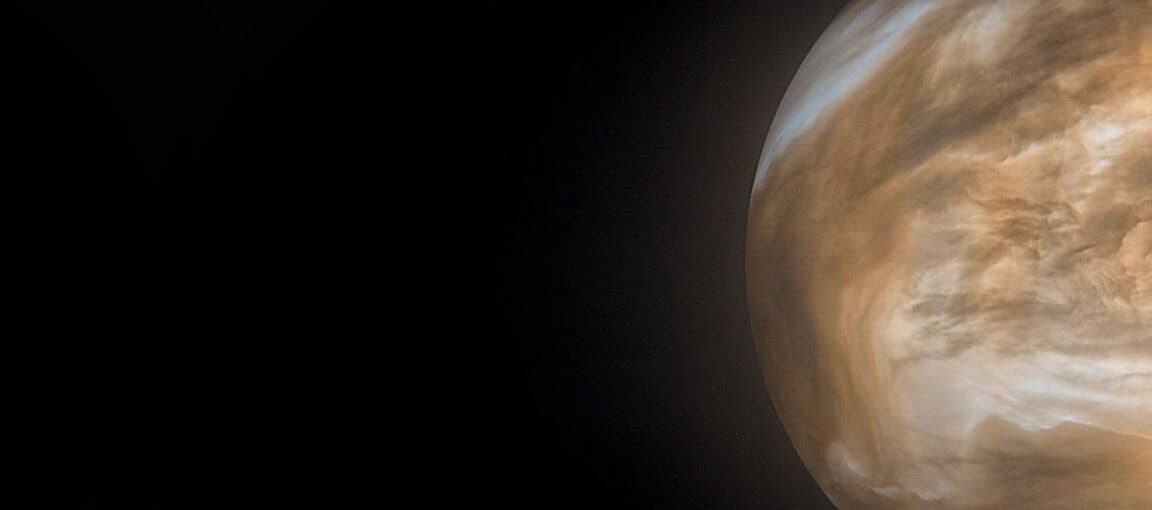
Venus, Earth's shrouded twin, has long held secrets within its dense, acidic atmosphere. For decades, the planet's persistent, high-altitude haze layer has defied definitive explanation, prompting theories ranging from exotic chemical reactions to unknown atmospheric phenomena.
Recent findings, however, point to a far more universal culprit: cosmic dust. New analysis, drawing upon observations from ground-based telescopes and re-evaluating data from past orbital missions like JAXA's Akatsuki probe, suggests that the mysterious veil is composed primarily of minuscule extraterrestrial particles.
These particles, often less than a micron in diameter, are thought to originate from comets and asteroids, continually sweeping through the inner solar system. They accumulate in Venus' upper atmosphere, where the planet's unique atmospheric dynamics trap them, forming a diffuse yet pervasive layer at altitudes between 60 and 80 kilometers.
This revelation marks a significant shift from previous hypotheses, which largely focused on internal Venusian processes, such as the photochemistry of sulfur compounds or volcanic outgassing. The presence of cosmic dust recontextualizes Venus' atmospheric chemistry, suggesting an external influence on its long-term evolution.
"The discovery fundamentally alters our understanding of Venus' atmospheric composition and its interaction with the broader solar system environment."
Understanding the role of cosmic dust is crucial for future missions aiming to characterize Venus' habitability potential or to develop atmospheric models. It highlights the pervasive nature of interplanetary material and its subtle yet profound impact on planetary environments, even those as seemingly self-contained as Venus.
For future off-world inhabitants, this finding underscores the omnipresence of cosmic dust. Whether on lunar bases, Martian habitats, or orbital stations, managing micrometeoroid and dust impacts is a constant concern. This research on Venus reveals a natural, planetary-scale dust collection mechanism, offering a unique analogue for understanding particulate behavior in different gravitational and atmospheric regimes. It reinforces the idea that even in seemingly pristine space environments, dust, in its myriad forms, remains a fundamental design consideration for everything from air filtration to material science.
Related Reading

Research
Cosmic Mirrors: Webb Reveals Distant Galaxies Through Gravitational Lensing
The James Webb Space Telescope captures a galaxy cluster that acts as a colossal lens, bending light to reveal hundreds of previously unseen galaxies from the early universe.
Research
Echoes of the Sun: Unlocking 19th-Century Space Weather
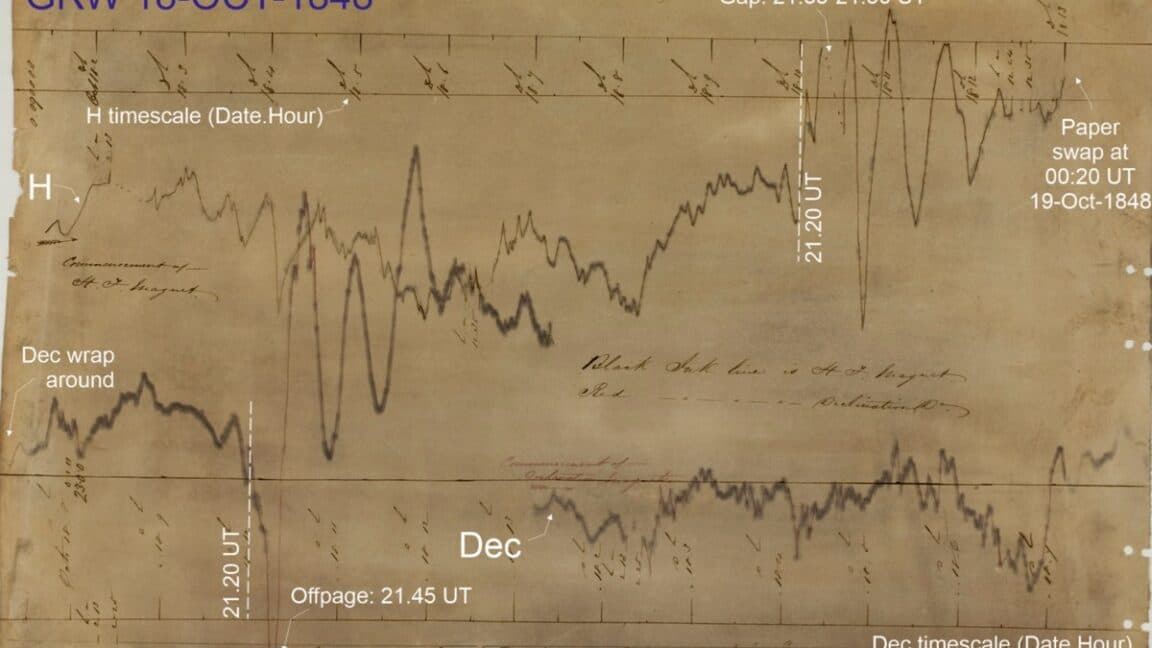
New research illuminates a forgotten 1840s geomagnetic event, offering critical insights into solar dynamics and the resilience of future off-world habitats.

Research
Venus's Ghost Moon: A Tale of Celestial Cannibalism
New scientific hypotheses suggest Venus may have once possessed a moon, only to consume it through immense tidal forces, reshaping our understanding of planetary evolution and stability.