Research|Issue 04
Venus's Ghost Moon: A Tale of Celestial Cannibalism
New scientific hypotheses suggest Venus may have once possessed a moon, only to consume it through immense tidal forces, reshaping our understanding of planetary evolution and stability.
- By
- ARTEMIS TOKYO Editors
- Dateline
- Pasadena, September 27, 2026
- Date
- September 27, 2026
- Time
- 4 min read
Source
Futurism
Venus, veiled in its thick, toxic atmosphere, has long presented an enigma to planetary scientists. Unlike Earth, it lacks a natural satellite, a feature that sets it apart from most other terrestrial worlds in our solar system. This absence has prompted new theories regarding its tumultuous past.
Recent scientific inquiry now suggests that Venus may not have always been a solitary planet. A compelling hypothesis posits that the scorching world once hosted its own moon, only to later consume it through immense gravitational and tidal forces. This dramatic event would redefine our understanding of Venus's evolution.
The proposed scenario involves a moon forming around Venus, possibly through a similar impact event that created Earth's own lunar companion. Over eons, the intense tidal interactions between Venus and its satellite would have gradually drawn the moon closer, eventually tearing it apart and integrating its mass into the planet itself.
"Venus May Have Devoured Its Moon, Scientists Find."
This celestial cannibalism offers a potential explanation for Venus's slow, retrograde rotation, a characteristic unique among the inner planets. The energy transfer during the moon's destruction could have significantly altered the planet's rotational dynamics, leaving it with its current peculiar spin.
Understanding such violent planetary histories holds significant weight for future off-world endeavors. As humanity contemplates establishing long-term presences beyond Earth, the stability of celestial bodies and their orbital mechanics becomes paramount. The fate of Venus's hypothetical moon serves as a stark reminder of the dynamic and sometimes destructive forces at play in space.
For those who might one day reside on or around other worlds, such insights are not mere academic curiosities. They inform the fundamental engineering of habitats, the selection of safe orbital paths, and the long-term planning for resource management, underscoring the necessity of respecting the immense, indifferent power of the cosmos.
Related Reading
Research
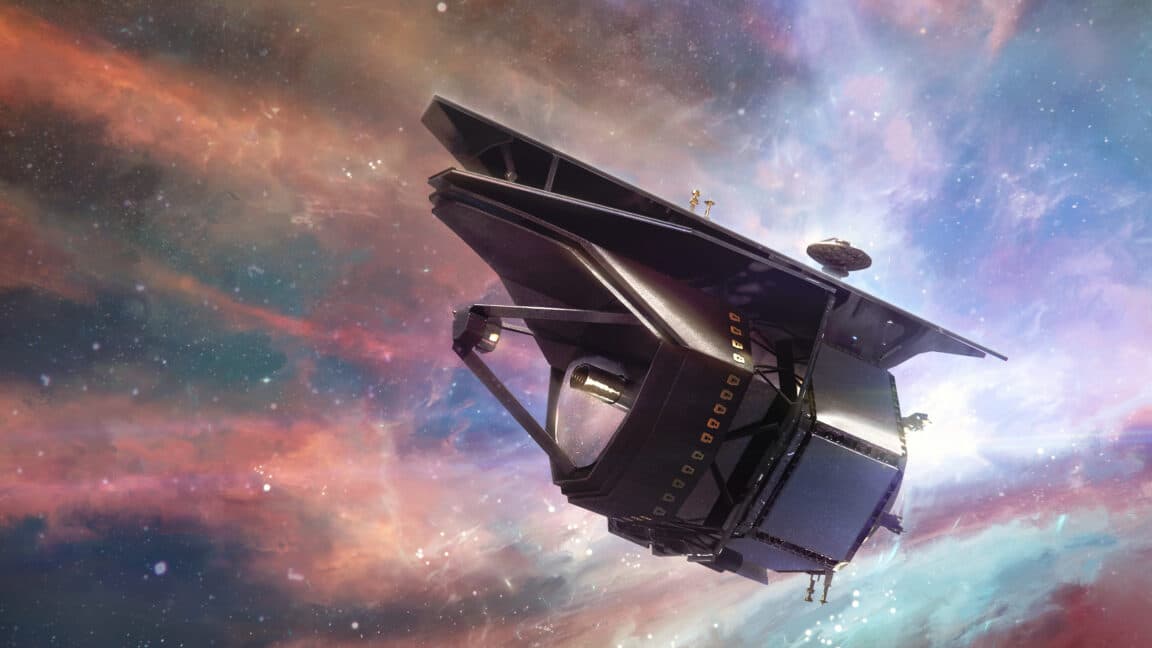
NASA's PRIMA: Accelerating the Cosmos
NASA aims to construct a billion-dollar space telescope in record time, setting a new precedent for complex scientific instrument development and deployment.

Space Tech
SpaceX Prepares for Defining Orbital Test
The upcoming orbital test flight of SpaceX's next-generation heavy-lift vehicle carries significant implications for future space operations and off-world habitation.

Space Tech
ESA's Aeolus-2 Completes Critical Testing for Wind Mapping
The European Space Agency announces a significant milestone for its next-generation wind-profiling satellite, promising enhanced climate models and weather prediction capabilities.