Research|Issue 04
Mars Express Uncovers 'Exotic Physics' in Martian Cloud Formation
New data from ESA's Mars Express suggests that the Red Planet's most enigmatic cloud defies conventional atmospheric models, hinting at unknown forces at play.
- By
- ARTEMIS TOKYO Editors
- Dateline
- October 7, 2026
- Date
- October 7, 2026
- Time
- 4 min read

The thin, frigid atmosphere of Mars continues to yield surprises. For years, scientists have observed a peculiar cloud formation, unlike any seen on Earth, hovering over the planet's surface. Now, new analysis from the European Space Agency's Mars Express orbiter, combined with advanced meteorological models, suggests this cloud is far stranger than previously understood.
Known for its elongated, wispy appearance, this Martian cloud has long puzzled researchers. While water ice clouds are common on Mars, this particular formation exhibits dynamics that challenge current atmospheric physics. It persists in ways that standard models of Martian weather struggle to replicate, hinting at fundamental gaps in our understanding.
Scientists meticulously compared observations from Mars Express with detailed simulations of the Red Planet's atmosphere. The discrepancies were notable, pointing towards a phenomenon not adequately captured by existing theories. The original report noted that there may be "some very exotic physics behind Mars’s most curious cloud."
This suggests that the forces shaping Martian weather are more complex and perhaps more alien than anticipated. The red planet holds its secrets close, revealing them slowly, layer by atmospheric layer. Such discoveries are not merely academic; they fundamentally reshape our approach to future exploration and settlement.
Understanding these atmospheric anomalies is crucial for any long-term human presence. Unpredictable weather events, driven by unknown physics, could pose significant challenges to habitat integrity, power generation from solar arrays, and the safety of surface operations. The stability of a Martian settlement depends on a comprehensive grasp of its environment.
For those who will one day live and work on Mars, this means a constant need for adaptability and robust engineering. Habitats will require designs resilient enough to withstand unforeseen atmospheric stressors, and life support systems will need to account for a planetary environment that is still actively revealing its deeper mysteries. The pursuit of knowledge about Mars is, in essence, the pursuit of a viable future there.
Related Reading

Research
Venus' Mysterious Haze Traced to Cosmic Dust
New research suggests the enigmatic veil shrouding Venus' upper atmosphere is not an exotic chemical byproduct, but a ubiquitous collection of interplanetary particles.

Research
Cosmic Mirrors: Webb Reveals Distant Galaxies Through Gravitational Lensing
The James Webb Space Telescope captures a galaxy cluster that acts as a colossal lens, bending light to reveal hundreds of previously unseen galaxies from the early universe.
Research
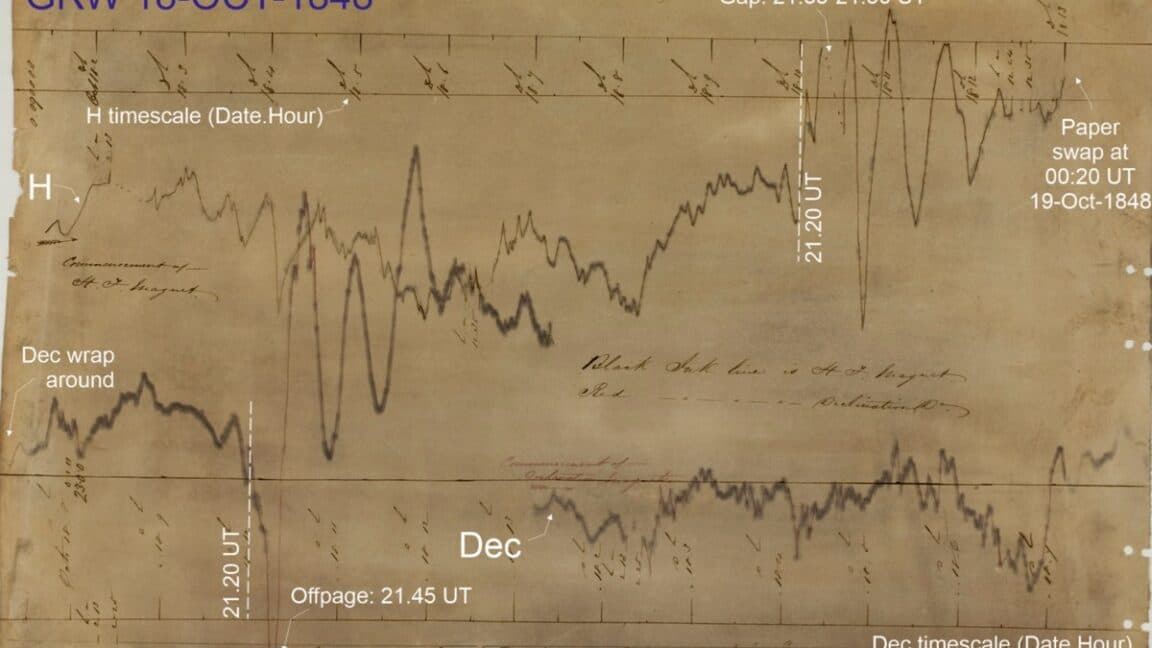
Echoes of the Sun: Unlocking 19th-Century Space Weather
New research illuminates a forgotten 1840s geomagnetic event, offering critical insights into solar dynamics and the resilience of future off-world habitats.