Research|Issue 04
Beyond the Snow Line: Microlensing Reveals Distant Worlds
A new review highlights gravitational microlensing as a critical tool for discovering wide-orbit exoplanets, expanding our understanding of planetary formation and the diversity of systems beyond our own.
- By
- ARTEMIS TOKYO Editors
- Dateline
- ARXIV, October 8, 2026
- Date
- October 8, 2026
- Time
- 5 min read
Source
arXiv
The universe beyond our solar system holds a multitude of planetary systems, many still veiled. While direct imaging and transit methods have revealed thousands of exoplanets, a new focus emerges on those orbiting far from their host stars, beyond the “snow line” where volatile compounds condense into ice. This region, crucial for understanding planet formation, is where gravitational microlensing offers a distinct advantage.
This method does not rely on the direct light of a star or planet. Instead, it observes the subtle bending of light from a background star as a foreground star and its accompanying planets pass in front of it. The planet's own gravitational field creates a secondary, brief brightening event, a signature that reveals its presence and characteristics.
Microlensing excels at detecting planets with wide orbits and diverse masses, including those that are difficult to spot with other techniques. These are often cold, distant worlds, analogous to the gas giants and ice giants in our own solar system. The technique thus complements existing methods, which are more sensitive to planets orbiting close to their stars or those with very high mass.
The study, a comprehensive review published as a preprint on October 8, 2026, underscores the method's unique capabilities. It details how the physical properties of these distant worlds—their mass and distance from Earth—can be extracted from the characteristic light curves observed during a microlensing event, or through additional high-angular resolution observations.
Microlensing is essential for the broader context of exoplanet demographics, as it can place constraints on planets, in wide orbits, beyond the snow line.
Understanding this parameter space is vital for unraveling the mysteries of how planets form, and indeed, how our own solar system came to be. This deeper insight into planetary architectures shifts the very expectation of what a solar system *is*.
For those contemplating a future off-world, this expanding knowledge of planetary diversity changes the very canvas upon which new human cultures might be painted. It suggests that the definition of a “habitable” or “resource-rich” world extends far beyond Earth-like conditions, broadening the scope for future exploration and potentially influencing the design of deep-space habitats tailored for environments unlike our own. This profound shift invites new architectures and new anxieties about the vastness.
Related Reading

Research
Mars Express Uncovers 'Exotic Physics' in Martian Cloud Formation
New data from ESA's Mars Express suggests that the Red Planet's most enigmatic cloud defies conventional atmospheric models, hinting at unknown forces at play.
Research
Venus' Mysterious Haze Traced to Cosmic Dust
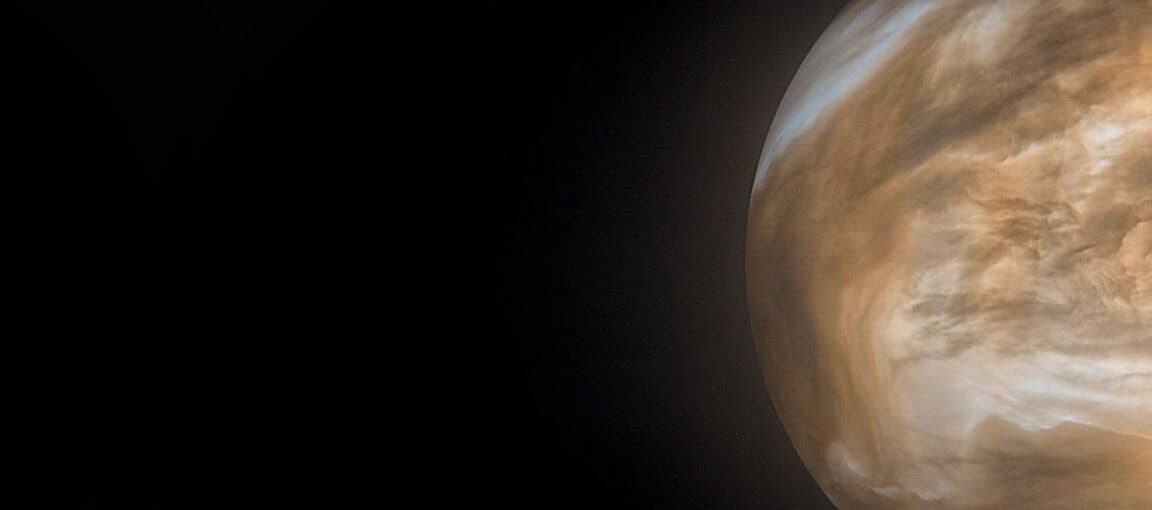
New research suggests the enigmatic veil shrouding Venus' upper atmosphere is not an exotic chemical byproduct, but a ubiquitous collection of interplanetary particles.

Research
Cosmic Mirrors: Webb Reveals Distant Galaxies Through Gravitational Lensing
The James Webb Space Telescope captures a galaxy cluster that acts as a colossal lens, bending light to reveal hundreds of previously unseen galaxies from the early universe.