Research|Issue 04
Precision in Orbit: A Satellite's Unseen Dance Confirms Einstein
A specialized satellite, reflecting laser pulses across vast distances, has offered the most rigorous examination to date of Einstein's theory of General Relativity, yielding unprecedented precision in understanding the fabric of spacetime.
- By
- ARTEMIS TOKYO Editors
- Dateline
- Earth Orbit, July 10, 2026
- Date
- July 10, 2026
- Time
- 5 min read
Source
Ars Technica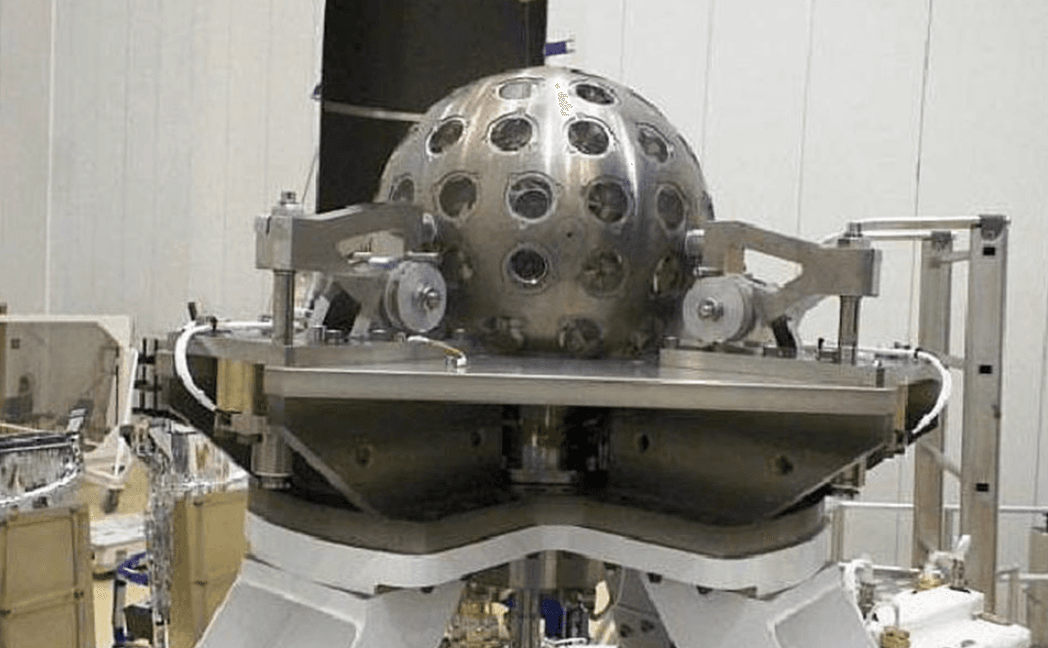
The universe, in its vastness, often reveals its most profound secrets through the most subtle of observations. A specialized satellite, designed to act as a celestial mirror, has recently concluded a mission that offers the most rigorous examination to date of Albert Einstein's theory of General Relativity. This endeavor pushes the boundaries of precision in understanding the fundamental fabric of spacetime.
Orbiting silently, this "disco ball" satellite is not a new concept. It is a highly reflective sphere, often passive, equipped with numerous retroreflectors. These facets allow ground stations to bounce laser pulses off its surface and precisely measure the time it takes for the light to return, even over distances spanning hundreds of kilometers. The faint glint of its many facets, visible only to specialized ground telescopes, belied the profound questions it sought to answer.
The experiment centered on measuring the minute distortions in spacetime caused by Earth's gravity. According to General Relativity, gravity not only pulls objects but also warps the very fabric of space and time. This warping affects the path and speed of light, leading to phenomena like gravitational time dilation and the Shapiro delay—where light takes slightly longer to travel through a gravitational field. By meticulously tracking the laser pulses, scientists could detect these minute delays.
An international research collaboration, involving institutions from Europe and beyond, meticulously analyzed the data collected over several years. Their findings confirmed Einstein's predictions to an unprecedented level of accuracy, improving upon previous tests by a factor of ten. This surpasses the precision achieved by earlier missions like Gravity Probe B, establishing a new benchmark for validating the theory.
"The data confirmed Einstein's predictions to a previously unattainable level of accuracy, pushing the boundaries of our understanding of gravity."
This achievement is more than an academic triumph; it has tangible implications for our technological future. The ultra-precise understanding of gravity's effects on time is critical for the accuracy of global navigation satellite systems (GNSS), deep space communication, and even the synchronization of global financial networks. Without accounting for relativistic effects, GPS satellites would quickly drift by kilometers each day.
For those who will one day live and work off-world, this level of precision becomes foundational. Whether on lunar bases, Martian settlements, or orbital habitats, the varying gravitational potentials will necessitate extremely accurate timekeeping and positioning systems. Everything from resource allocation and autonomous vehicle operation to synchronized scientific experiments and communication across vast, non-uniform gravitational fields will rely on the robust validation of General Relativity. This research ensures that the clocks and rulers of future off-world societies will remain true, regardless of their cosmic address.
Related Reading
Research
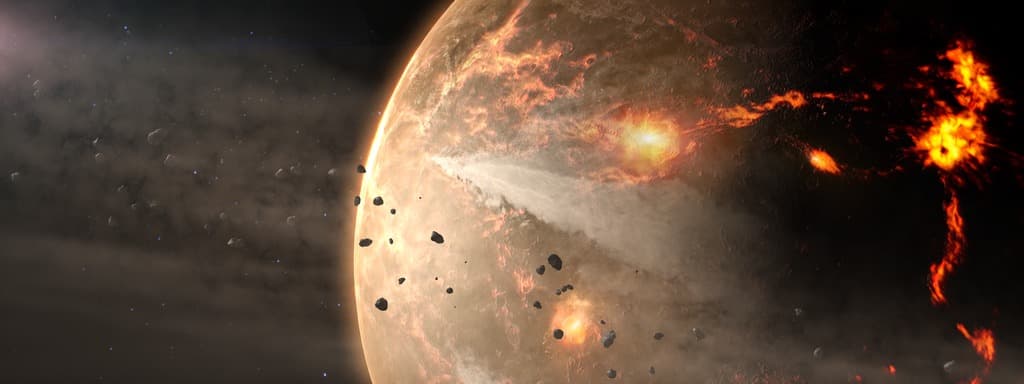
Earth's Violent Infancy: A Crust Reshaped by Cosmic Bombardment
New research suggests that Earth's earliest crust was repeatedly melted and reformed by intense cosmic bombardment, delaying the planet's stabilization and the emergence of life-supporting conditions.

Research
Martian Carbon: A Geologic Anomaly or Vestige of Life?
A recent analysis of a Martian rock sample reveals unexpected concentrations of carbon, prompting scientists to reconsider the planet's geological past and potential for life. The origin remains a profound question.
Research
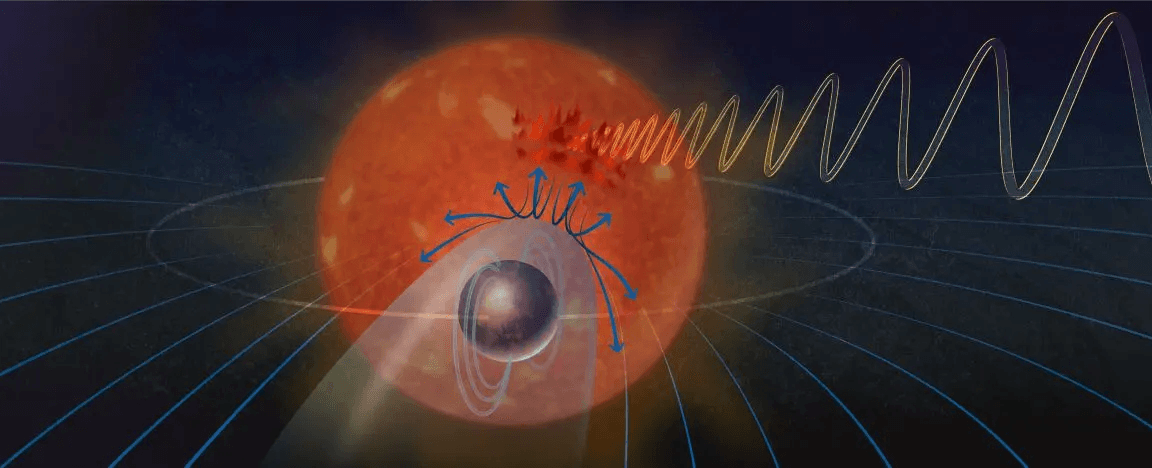
A Magnetic Embrace: Worlds Bound by Stellar Fields
Recent astronomical observations reveal exoplanets in such extreme proximity to their host stars that their magnetic fields merge, creating a dynamic, volatile environment unlike anything in our solar system.