Research|Issue 04
Beyond Mars: Japan's MMX Mission and the Future of Off-World Resources
Japan's Martian Moons eXploration (MMX) mission is poised to launch in 2026, aiming to return samples from Phobos. This endeavor promises to reshape our understanding of planetary formation and inform future off-world habitation.
- By
- ARTEMIS TOKYO Editors
- Dateline
- TOKYO
- Date
- October 20, 2026
- Time
- 3 min read
Source
Ars Technica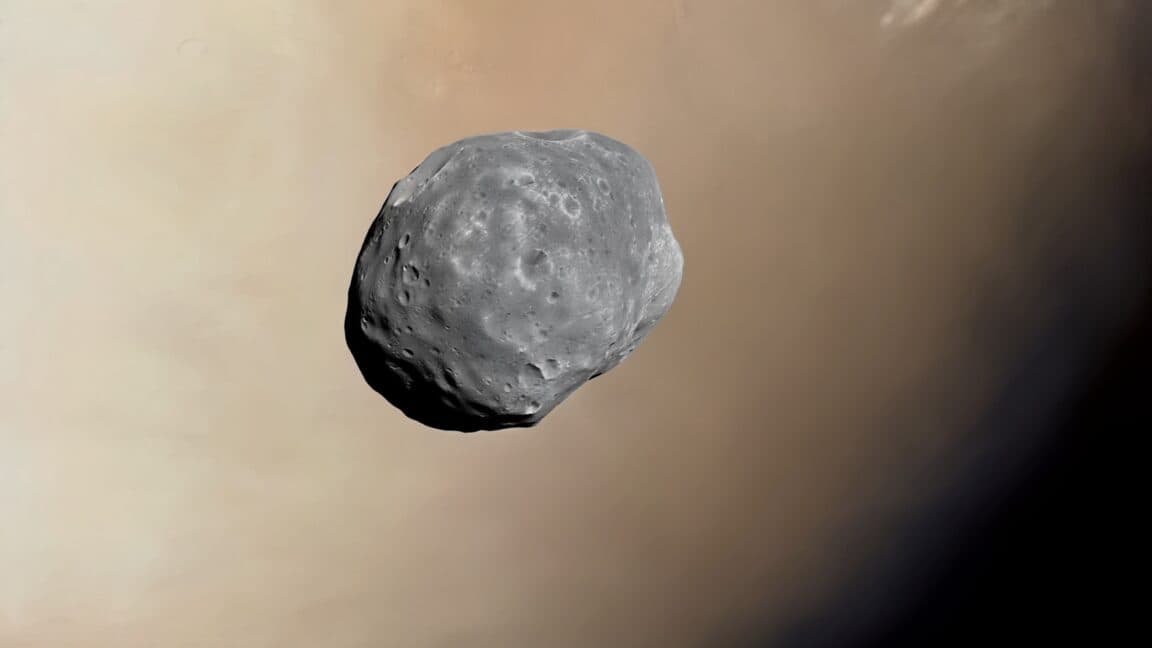
The crimson glow of Mars has long captivated humanity, but it is its enigmatic moons, Phobos and Deimos, that now draw precise scientific focus. These small, irregularly shaped bodies orbit close to the red planet, holding secrets that could redefine our understanding of the solar system's early history.
In 2026, Japan's Aerospace Exploration Agency (JAXA) will embark on a daring journey with its Martian Moons eXploration (MMX) mission. This ambitious undertaking aims to collect samples from Phobos and return them to Earth, a feat of engineering and planetary science.
Phobos, the larger of Mars's two moons, presents a compelling target. Its origin remains a subject of debate: is it a captured asteroid, or was it formed from debris ejected during a massive impact on Mars? The materials brought back by MMX could provide definitive answers, offering a unique window into the processes that shaped our cosmic neighborhood.
The mission builds upon JAXA's proven expertise in sample return, following the successes of the Hayabusa and Hayabusa2 missions, which brought asteroid samples back to Earth. MMX will employ sophisticated landing and sampling mechanisms to retrieve precious regolith from the surface of Phobos, a body roughly 22 kilometers in diameter.
Japan is set to launch a mission to bring home a piece of the Martian moon Phobos, the original report notes.
After an extensive journey and careful collection, the samples are expected to return to Earth in the early 2030s. Their analysis will not only advance fundamental science but also contribute to the practical knowledge required for future deep-space endeavors.
The very dust returned from Phobos could inform the design of future Martian habitats, offering insights into local material properties and the elemental composition available for in-situ resource utilization. This is not merely scientific inquiry; it is a reconnaissance mission for future off-world builders and inhabitants, laying the groundwork for how we might one day live on the fringes of the Martian sphere.
Related Reading
Research
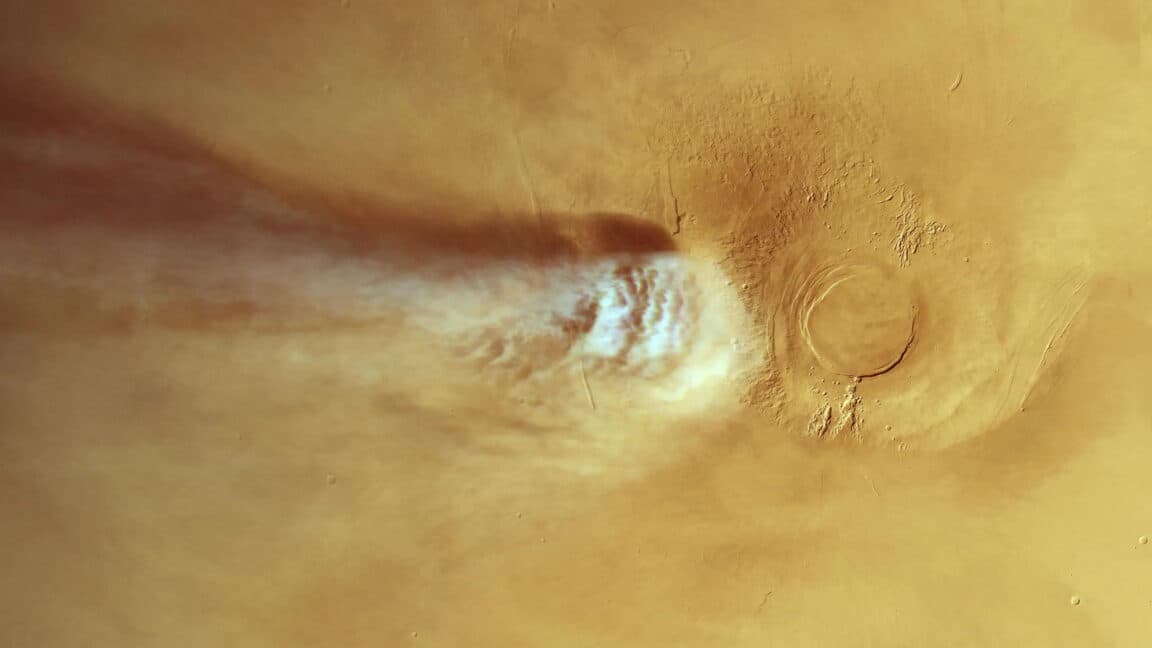
Mars Reveals a 1,000-Mile Cloud, Hinting at Uncharted Physics
A vast cloud formation stretching across Mars presents a profound challenge to established atmospheric models, suggesting the Red Planet harbors meteorological phenomena unlike any observed on Earth or in current planetary science.

Research
Echoes from an Ancient Stellar Death
Light from a cosmic explosion that reached Earth during Japan's Samurai era now reveals unexpected conditions at its source.

Research
A Signal from Silence: Webb Detects the Unexpected in Cosmic Voids
The James Webb Space Telescope has reportedly detected a persistent signal emanating from a region of space previously considered empty, prompting fresh inquiry into the fundamental nature of the cosmos.