Space Tech|Issue 04
Orbital Dexterity: The Next Generation of Satellite Servicing
A new class of robotic servicing satellite, anticipated for deployment, promises to redefine the longevity and utility of orbital assets, heralding a future of dynamic space infrastructure.
- By
- ARTEMIS TOKYO Editors
- Dateline
- ORBITAL FRONTIER, July 2026
- Date
- July 24, 2026
- Time
- 5 min read
Source
Ars Technica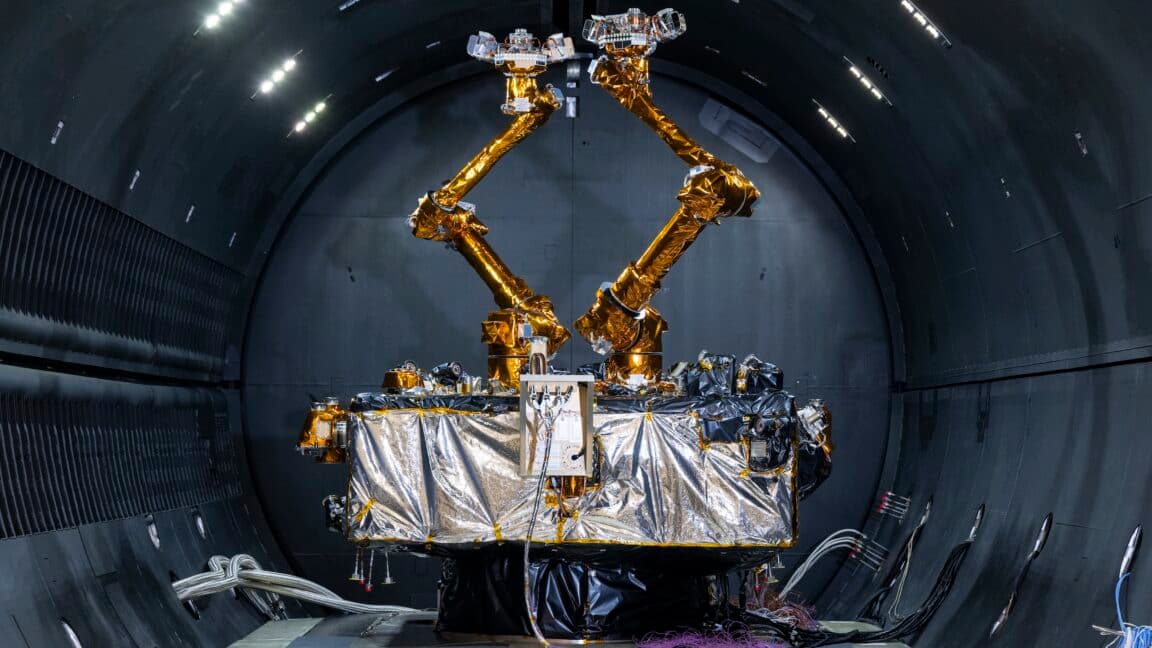
The expanse of Earth's orbit, once a realm of one-way missions, is slowly transforming into a domain where assets can be maintained, upgraded, and even repositioned. This shift is driven by the advent of sophisticated robotic servicers, poised to extend the operational lives of satellites and mitigate the growing issue of space debris.
Among these emerging capabilities, an aerospace firm is reportedly preparing to unveil what is described as the world's most advanced robotic servicing satellite. While specific details of its precise developer and operational parameters remain closely guarded, its public unveiling is anticipated around July 2026, marking a significant milestone in orbital logistics.
This new class of servicer is expected to possess unprecedented dexterity and autonomy, capable of complex tasks such as refueling, intricate repairs, and module replacements. Such capabilities move beyond simple de-orbiting or minor adjustments, envisioning a future where satellites are no longer disposable, but rather evolving components of a larger system.
The implications for the burgeoning space economy are profound. By prolonging the life of costly orbital infrastructure, operators can reduce replacement cycles and optimize resource allocation. This extends to communication satellites, Earth observation platforms, and even nascent orbital habitats, ensuring sustained utility and return on investment.
"This is the world's most advanced robotic servicing satellite—that we know about."
Furthermore, the ability to service and repair in orbit offers a tangible solution to the increasing problem of space junk. Rather than abandoning defunct satellites, these robotic systems could potentially salvage them, either by repairing them for continued use or by safely de-orbiting them, clearing vital orbital pathways.
For those who will eventually reside and work off-world, the development of such advanced robotic servicing capabilities is foundational. It promises a future where orbital habitats and lunar infrastructure can be built, maintained, and expanded with greater efficiency and less reliance on expensive, hazardous human extravehicular activity. The cost of living and operating in space will become more predictable, and the materials used in orbital construction may evolve to be more modular and repairable, fostering a culture of longevity and resourcefulness in the extreme environment of space.
Related Reading

Space Tech
ULA's Vulcan Centaur Grounding Prompts Financial Recourse
United Launch Alliance navigates financial headwinds as its next-generation Vulcan Centaur rocket remains grounded, necessitating a loan guarantee from its parent companies.
Space Tech
The Inflatable Frontier: Aether Habitat Reshapes Orbital Living
Orbital Living Solutions unveils a new expandable module, promising unprecedented personal space and domesticity for future off-world residents.
Space Tech
NASA Workforce Reductions Signal Broader Challenges for Space Ambition
A fifth of NASA's civil servant workforce has departed in the last year, impacting over two dozen major projects and raising questions about the pace of future off-world development.