Space Tech|Issue 04
ULA's Vulcan Centaur Prepares for Next Flight
United Launch Alliance readies its next-generation heavy-lift rocket, Vulcan Centaur, for a pivotal return to flight, shaping the future of space access.
- By
- ARTEMIS TOKYO Editors
- Dateline
- Cape Canaveral, October 28, 2026
- Date
- October 28, 2026
- Time
- 3 min read
Source
Ars Technica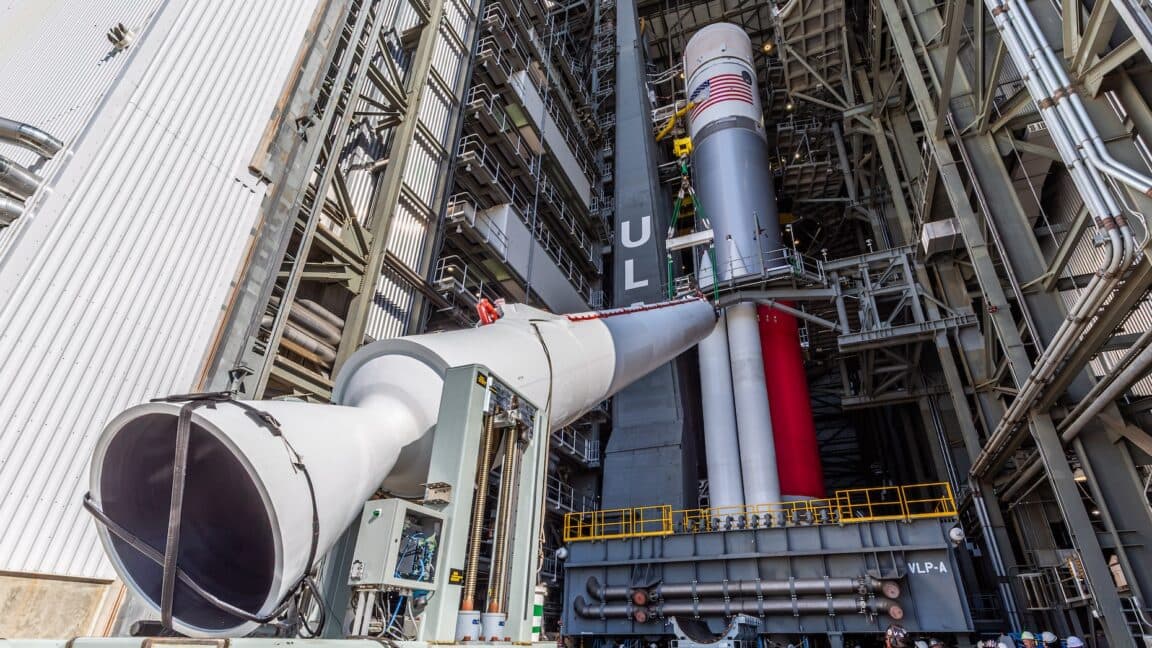
A sense of anticipation surrounds the launchpad at Cape Canaveral. United Launch Alliance (ULA) prepares for the next flight of its Vulcan Centaur rocket, a mission that marks a critical juncture for the company's competitive standing in the commercial space sector.
Scheduled for an upcoming Friday the 13th, this flight aims to re-establish ULA's rhythm in heavy-lift operations. The launch will originate from Cape Canaveral Space Force Station in Florida, following its successful inaugural certification flight, Cert-1, earlier this year.
Vulcan Centaur is designed to replace ULA's venerable Atlas V and Delta IV rockets. These workhorses have been foundational for US national security and scientific missions for decades, and Vulcan promises enhanced capabilities and improved cost-efficiency.
The rocket stands over 60 meters tall, a towering structure of advanced engineering. It is capable of delivering up to 27,200 kilograms to low Earth orbit, making it a formidable contender for various payload requirements, from satellites to lunar landers.
The return to flight is vital for ULA's long-term strategy, underscoring their commitment to securing a significant share of the burgeoning space economy.
"The Vulcan Centaur's next mission will be a significant test of its operational cadence."
For those envisioning life beyond Earth, a reliable, high-cadence heavy-lift vehicle like Vulcan changes the calculus of off-world development. It means more frequent delivery of construction materials, life support systems, and scientific equipment to lunar bases or orbital outposts. The cost of establishing foundational infrastructure in space becomes less prohibitive, shifting from aspirational to logistical. This operational reliability directly impacts the tangible pace of building new habitats and economies in space.
Related Reading

Space Tech
The Lunar Far Side: From Scientific Frontier to Warfighting Domain
The US Space Force declares the Moon's remote hemisphere a strategic military zone, signaling a new era of cislunar competition and its implications for future off-world settlement.

Space Tech
Orbital Matter: The First Beam in the Void
A new chapter in space construction begins as Orbital Matter successfully 3D-prints a rigid beam in the vacuum of space, paving the way for on-demand orbital infrastructure.

Space Tech
European Alliance Forges Compact Dual-Use Satellite Solution
Belgium's Simera Sense and the Czech Republic's Spacemanic collaborate to offer an integrated, versatile satellite platform, challenging the dominance of larger systems.