Space Tech|Issue 04
The Unseen Foundations: From Launch Pads to Martian Ambitions
As private aerospace ventures push deeper into space, the essential groundwork — from robust launch infrastructure to audacious planetary targets — continues to evolve, defining the future of off-world operations.
- By
- ARTEMIS TOKYO Editors
- Dateline
- June 19, 2026, Cape Canaveral
- Date
- June 19, 2026
- Time
- 6 min read
Source
Ars Technica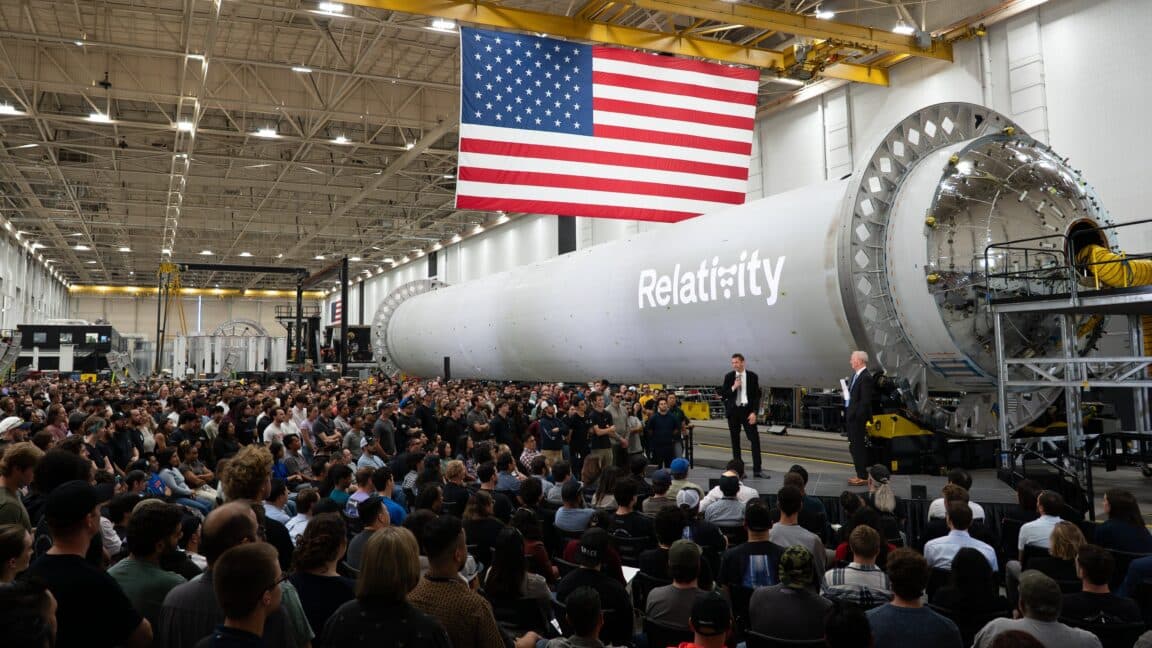
The relentless expansion of human presence beyond Earth requires not only visionary rockets but also the often-unseen terrestrial infrastructure that makes such journeys possible. In this intricate dance between ground and orbit, private entities are carving out distinct paths, each contributing to a more accessible and ambitious space economy.
Blue Origin, for instance, is engaged in a significant rebuild of its launch pad facilities. This undertaking at Launch Complex 36, originally a NASA site for Atlas rockets, underscores the long-term investment required to support their New Glenn heavy-lift rocket. Such work is not merely maintenance; it is a strategic enhancement designed to ensure the reliability and cadence necessary for sustained operations.
The commitment to a robust launch capability is mirrored by an expanding vision for destinations. Relativity Space, known for its innovative 3D-printed Terran R rocket, has articulated a clear ambition to target Mars. This move signifies a maturation beyond Earth orbit, aiming for interplanetary missions that could one day deliver substantial payloads to the red planet.
The Terran R, with its unique manufacturing approach, represents a push towards industrial scalability and reduced production times. Its design philosophy suggests a future where rockets are not bespoke marvels but rather efficiently produced vehicles capable of frequent, high-volume missions.
These two developments, while distinct in their immediate focus—one on terrestrial readiness, the other on extraterrestrial reach—are intrinsically linked. Reliable, high-capacity launch infrastructure is the prerequisite for sustained interplanetary exploration. Without the ability to send large quantities of material into space consistently, ambitions for Mars remain largely theoretical.
The original report notes the unyielding drive to establish enduring off-world capabilities.
For those who will eventually live and work off-world, these advancements translate into tangible realities. A rebuilt launch pad means more consistent and potentially cheaper access to orbit, facilitating the delivery of habitat modules, life support systems, and essential supplies. A Mars target, meanwhile, opens the door to new economic frontiers, resource acquisition, and the profound human experience of settling another world. The steady drumbeat of infrastructure development today lays the foundation for the homes and industries of tomorrow, far beyond Earth’s atmosphere.
Related Reading

Space Tech
Aether Dwelling: Designing for Life Beyond Survival on the Moon
A new modular lunar habitat prototype emphasizes psychological well-being and cultural integration, moving beyond purely utilitarian design for off-world living.
Space Tech
The Fabric of Future Worlds
New advancements in deployable habitat materials promise to redefine living spaces on the Moon and beyond, blending resilience with unexpected comfort.

Space Tech
India's Digital Sovereignty in Orbit: Jio's LEO Constellation Ambition
India’s largest telecommunications provider, Jio Platforms, is charting a course for a nationally controlled low Earth orbit satellite network, signaling a new era of digital independence.