Space Tech|Issue 04
The Atlas Prime Ascendant: A New Era of Lunar Logistics
Aether Dynamics' Atlas Prime heavy-lift rocket achieves a landmark rapid reuse, signaling a profound shift in orbital economics and the viability of sustained lunar operations.
- By
- ARTEMIS TOKYO Editors
- Dateline
- Spaceport America, July 2, 2026
- Date
- July 2, 2026
- Time
- 4 min read
Source
Space.com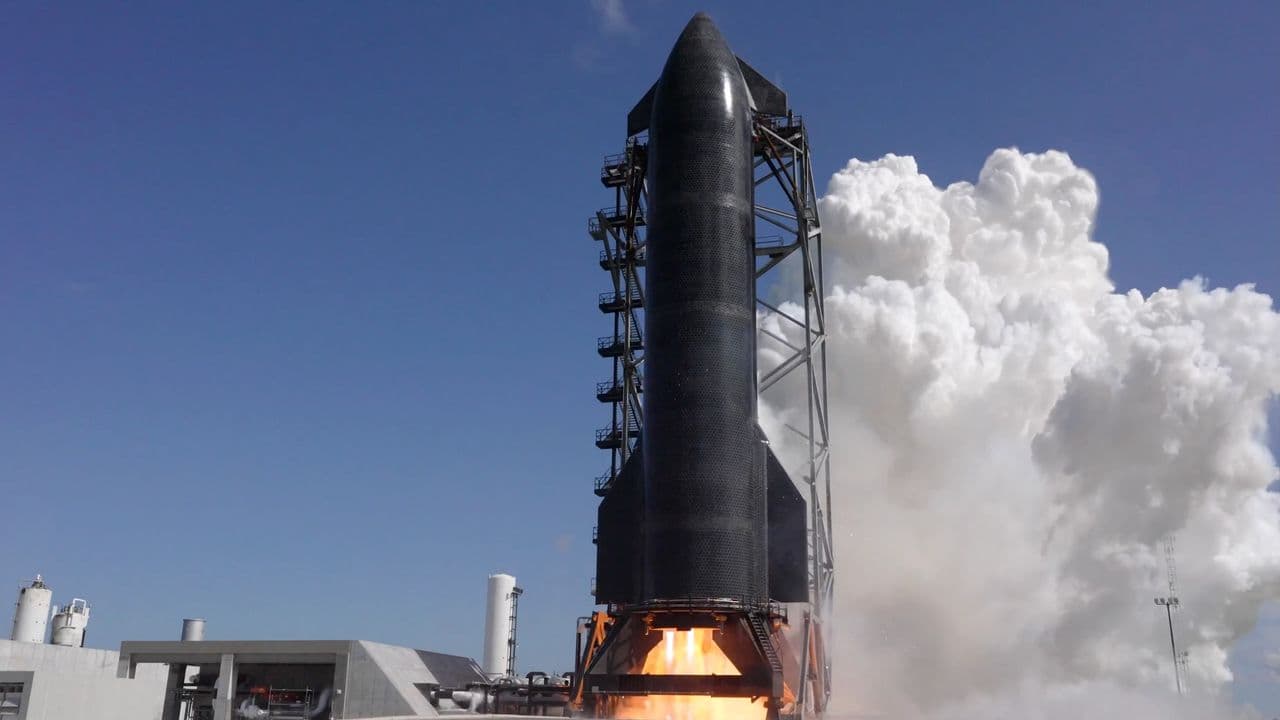
The humid air above Spaceport America shimmered on July 2, 2026, as Aether Dynamics launched its Atlas Prime rocket. This was not merely another ascent; it was a demonstration of a new logistical paradigm for off-world endeavors.
The 100-meter-tall vehicle, capable of delivering 80 metric tons to low Earth orbit, lifted off precisely on schedule. Its twin booster stages executed synchronized landings back at the launch site, a now-familiar ballet of controlled descent.
What distinguished this flight was the subsequent turnaround. Within 24 hours, one of the recovered boosters was prepped and launched again, carrying a smaller test payload. This rapid-fire reusability had been the company's stated goal, a capability previously unseen in a vehicle of this scale.
This achievement promises to drastically reduce the cost per kilogram to orbit, potentially halving current figures for heavy-lift missions. It sets a new benchmark, surpassing the reusability cycles of earlier generation rockets like the Falcon 9 and approaching the theoretical efficiency needed for regular lunar supply chains, a feat once considered decades away.
This accelerated cadence redefines expectations for space logistics.
For those envisioning life beyond Earth, the Atlas Prime represents more than just a rocket. It is a freighter, a delivery truck for the Moon and beyond. It means the materials for lunar habitats—radiation shielding, structural elements, life support systems—can arrive with greater frequency and at a predictable, lower cost.
This logistical shift will directly influence the architecture of off-world settlements, allowing for more expansive and resilient designs. It suggests a future where the cost of a lunar-bound shipping container is a calculable business expense, rather than an astronomical sum. This brings the prospect of sustained off-world living from the realm of engineering marvel to economic reality, shaping the very texture of daily life in nascent lunar communities.
Related Reading

Space Tech
Perovskite Solar Panels Pivot to Orbit
Verde Technologies shifts its focus from terrestrial rooftops to orbital data centers, betting on thin-film perovskite for future space power.

Space Tech
The Unseen Thud: A Secret AI Device and Off-World Autonomy
A speculative report hints at a setback for a SpaceX AI device, underscoring the complexities of automation in the unforgiving vacuum of space and its implications for future off-world habitats.

Space Tech
Orbital Vigilance: True Anomaly Demonstrates Rapid Satellite Inspection
A recent mission showcased the speed and precision of autonomous systems in monitoring space assets, signaling a new era for orbital situational awareness.