Space Tech|Issue 04
Starship Eyes Tower Catch After Thirteenth Flight Success
SpaceX's Starship program advances towards its ambitious tower catch maneuver, a critical step for routine, fully reusable spaceflight. The implications for off-world habitation and logistics are profound.
- By
- ARTEMIS TOKYO Editors
- Dateline
- Starbase, Texas
- Date
- July 25, 2026
- Time
- 5 min read
Source
Ars Technica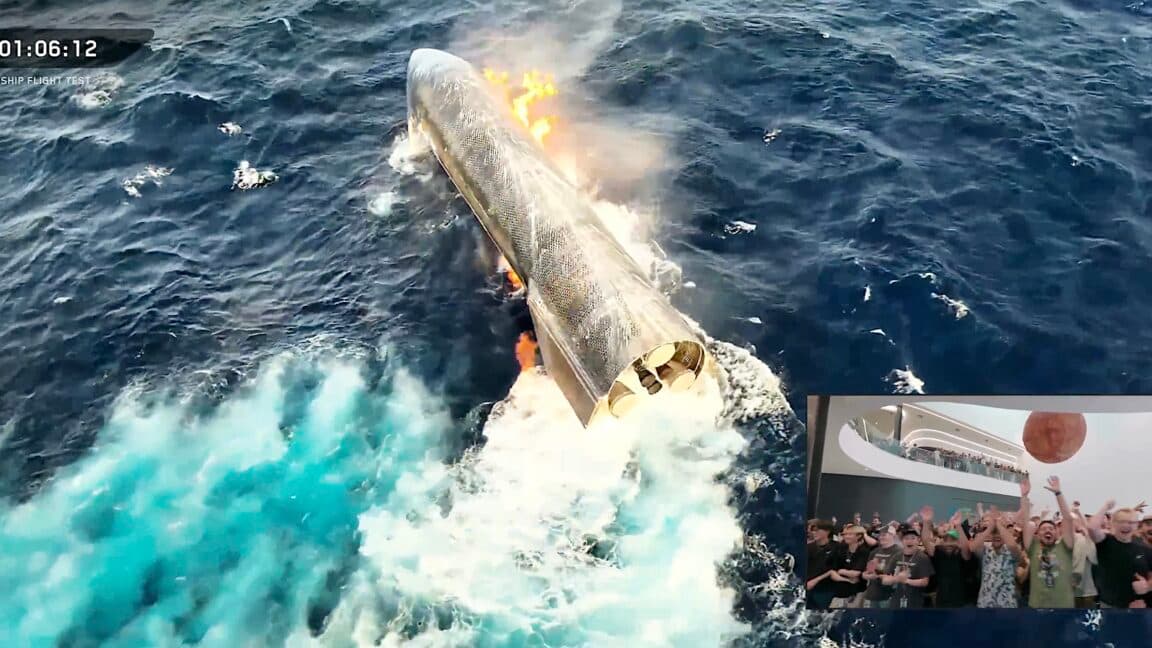
From its launch site at Starbase, Texas, SpaceX continues to refine its Starship and Super Heavy booster system. The thirteenth integrated flight test of the Starship vehicle concluded auspiciously, clearing the path for the next, more complex operational milestone.
This latest flight focused on demonstrating controlled re-entry and landing maneuvers, validating critical systems for future missions. While the precise details of the flight profile remain proprietary, the success has emboldened the company to pursue its most ambitious recovery method yet: the tower catch.
The tower catch involves the Super Heavy booster returning to the launch site and being mechanically caught by the launch tower's arms, rather than performing a propulsive landing on legs. This method promises rapid turnaround times and eliminates the need for heavy landing gear, enhancing payload capacity.
Such a maneuver demands extraordinary precision, orchestrating the descent of a booster standing over 70 meters tall to align perfectly with the tower's grasping mechanisms. It represents a significant leap from the propulsive landings pioneered by the Falcon 9, pushing the boundaries of rocket reusability.
“The success of the thirteenth flight provided invaluable data for the next phase of Starship development.”
Should the tower catch prove reliable, it would fundamentally alter the economics of space access. The vision is one where rockets are not merely reusable, but immediately ready for their next mission, much like an aircraft returning to its gate.
Off-World Logistics Reimagined
For those envisioning a future beyond Earth, this development carries immense weight. The ability to launch and recover the largest and most powerful rocket system with minimal refurbishment dramatically lowers the cost per kilogram to orbit, to the Moon, and eventually to Mars. This translates directly into cheaper construction materials, more affordable life support systems, and a reduced financial burden for transporting personnel.
The texture of off-world life will be shaped by such efficiencies. Lunar habitats could be built with locally sourced materials delivered by a constant stream of Starships, while Martian settlements might receive regular resupply, turning ambitious exploration into sustainable presence. The frequency of transport, once a bottleneck, could become a given, allowing for a more fluid exchange between Earth and its nascent orbital and planetary outposts.
Related Reading

Space Tech
Adaptive Interiors: The Next Generation of Orbital Living
A new habitat module design promises reconfigurable living spaces, signaling a shift towards domesticity and personalization in off-world architecture.

Space Tech
A Bolt from the Blue: Rocket Resilience in Unpredictable Skies
A mid-launch lightning strike on a Chinese rocket highlights the critical need for robust engineering against environmental hazards, offering lessons for future off-world infrastructure.
Space Tech
A New Modularity for Lunar Living
Orbital Ascent's latest habitat module test points to a future of adaptable, expandable lunar settlements, transforming the economics of off-world permanence.