Space Tech|Issue 04
SpaceX Secures Major Military Satellite Launch Contracts
The commercial launch provider has been awarded $1.6 billion to deploy networks critical for national security, underscoring the deepening integration of private enterprise into global defense infrastructure.
- By
- ARTEMIS TOKYO Editors
- Dateline
- TOKYO, JAPAN – July 29, 2026
- Date
- July 29, 2026
- Time
- 6 min read
Source
SpaceNews
The intersection of commercial space capabilities and national security interests continues to expand, with significant implications for both industries. SpaceX, a prominent private launch provider, has recently secured contracts totaling $1.6 billion from the U.S. military to deploy a series of advanced satellite networks.
These contracts mandate the use of SpaceX's workhorse Falcon 9 rockets for the launches. The satellites are designed to support critical defense functions, including enhanced missile tracking, precise targeting capabilities, and secure military communications across various theaters of operation.
The substantial investment highlights a growing reliance by defense agencies on commercial space companies for infrastructure that was once exclusively the domain of government-led programs. This shift allows for faster deployment cycles and potentially more cost-effective access to orbit, leveraging the innovation driven by private competition.
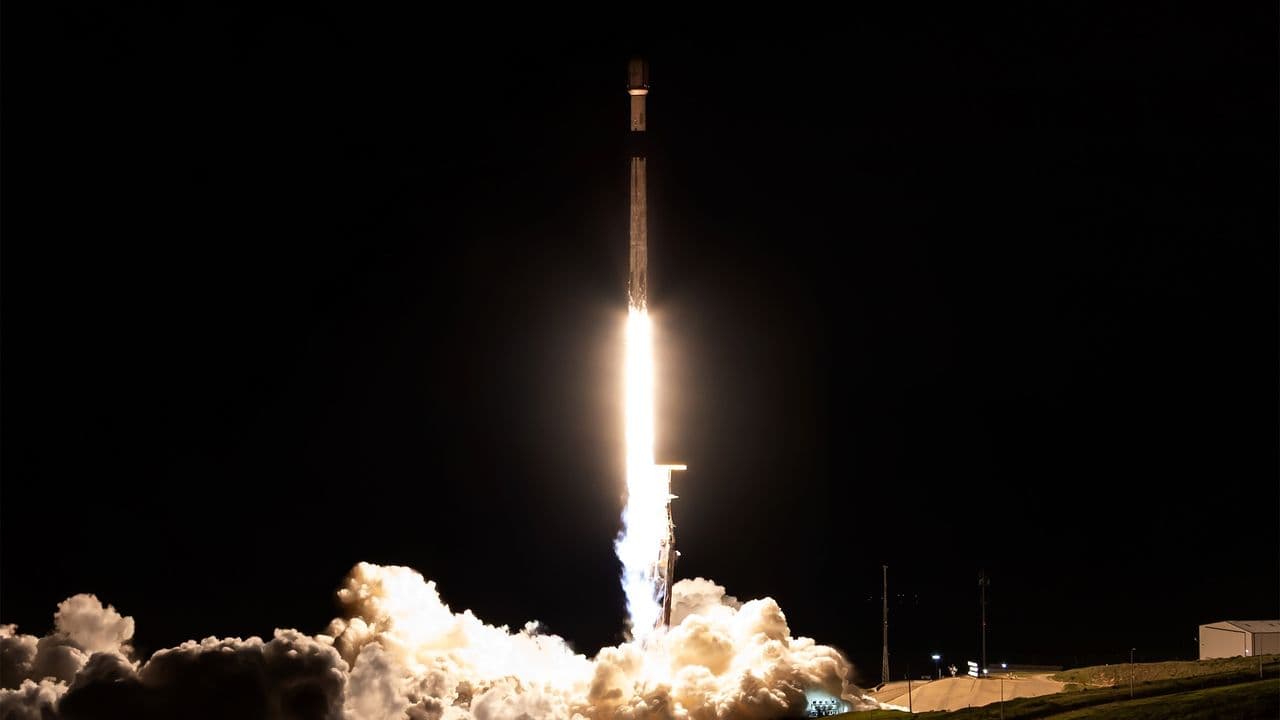
Falcon 9 will launch satellites supporting missile tracking, targeting and military communications.
The sheer volume of data these networks will handle, a continuous stream equivalent to hundreds of thousands of simultaneous high-definition video calls, underscores their operational weight. This robust digital backbone ensures that military assets can communicate reliably, even in contested environments, providing an unprecedented level of situational awareness.
For those contemplating a future beyond Earth, such developments in secure, ubiquitous satellite communication are foundational. The quiet hum of a launch vehicle, once a symbol of exploration, now increasingly echoes the strategic imperatives of nations. Reliable, high-bandwidth networks, initially developed for terrestrial defense, will become indispensable for establishing and maintaining any sustained human presence off-world. From navigating lunar surfaces to managing complex orbital logistics or communicating across Martian distances, the underlying technologies for secure, resilient data transfer will be paramount for the daily rhythms of off-world life and work.
Related Reading
Space Tech
Plasma-Torch Thruster Redefines Lunar Transit
A new propulsion system promises to cut travel times to the Moon to under 24 hours for cargo, fundamentally altering the economics and psychology of off-world habitation.

Space Tech
Simulated Crisis Underscores Off-World Rescue Complexities
A hypothetical NASA rescue mission scenario reveals the profound challenges of managing unforeseen crises in the unforgiving environment beyond Earth.

Space Tech
New Zealand's Outlier Space Secures Funding for Reentry Vehicle
Outlier Space raises $7.3 million to develop New Zealand’s first private reentry vehicle, aiming for a 2028 debut.