Space Tech|Issue 04
Orbital Rescue: The Mission to Save the Savior Satellite
Engineers are devising an unprecedented plan to recover a servicing satellite that itself encountered operational difficulties, highlighting the intricate challenges of maintaining space infrastructure.
- By
- ARTEMIS TOKYO Editors
- Dateline
- TOKYO
- Date
- August 1, 2026
- Time
- 4 min read
Source
Ars Technica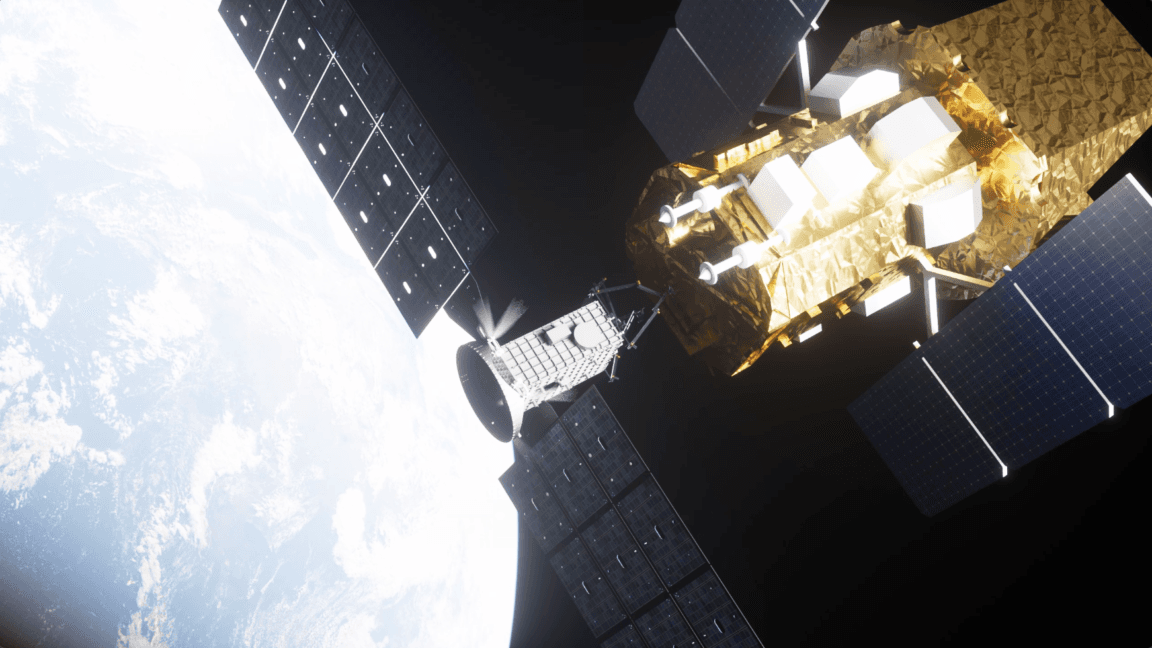
In the cold vacuum of Earth orbit, every mechanical system operates at the edge of its design limits. The silence of space offers no quarter for mechanical failure, only the stark truth of physics. For decades, satellites have largely functioned as independent entities, their failures often leading to abandonment. Yet, as orbital infrastructure grows in complexity and value, the imperative to repair and extend operational lifespans becomes critical.
NASA's Swift Gamma-Ray Burst Explorer, a venerable spacecraft launched in 2004, has long been a sentinel for some of the universe's most violent phenomena. As its operational life neared its end, plans were set in motion for a dedicated servicing satellite to extend its mission, a testament to the growing ambition of in-orbit maintenance. This servicing mission aimed to refuel or repair Swift, pushing the boundaries of what was previously considered possible.
However, the very mission designed to save Swift now finds itself in peril. The servicing satellite, after successfully reaching its target orbit, encountered unexpected propulsion system anomalies. These issues rendered it unable to complete its rendezvous with Swift, leaving it adrift and non-functional for its primary purpose, a silent testament to the unforgiving nature of the orbital environment.
Engineers are now engaged in a complex salvage operation, designing an unprecedented sequence of maneuvers to activate dormant systems or reconfigure its trajectory using backup thrusters. This involves remote diagnostics and precise command uploads, a delicate procedure akin to open-heart surgery performed from millions of kilometers away. The stakes are high, not only for the substantial investment in the servicing satellite itself but for the future of in-space repair capabilities.
"The challenge lies not just in technical execution, but in pioneering a new operational playbook for orbital resilience."
This scenario underscores a fundamental truth for future off-world inhabitants: resilience must be designed into every system. Whether building habitats on the Moon, mining resources on Mars, or maintaining vast orbital arrays, the ability to repair, refuel, and reconfigure infrastructure will be paramount. A future where human settlements thrive beyond Earth will depend on robust, redundant, and serviceable systems, where every component can be brought back from the brink of failure. The lessons learned from saving a satellite sent to save another will directly inform the architectural principles of sustainable off-world living, where every tool and every structure must possess a built-in capacity for recovery and regeneration.
Related Reading

Space Tech
K2 Space Secures Space Force Contract for Orbital Laser Communications
The U.S. Space Force awards K2 Space a $22.9 million contract to demonstrate high-speed, secure optical data links between satellites, signaling a shift in orbital communication infrastructure.

Space Tech
Electric Propulsion Breakthrough Signals New Era for Orbital Logistics
A private firm's successful test of an advanced electric propulsion system promises to redefine the economics of space deployment and lunar transport.
Space Tech
Beyond the Capsule: Lunar Habitats Embrace Flexible Design
A new self-healing polymer promises not only robust protection but also adaptable, aesthetically rich living spaces for future lunar settlers, shifting the paradigm of off-world architecture.