Space Tech|Issue 04
Commercial Nuclear Power Ignites New Era for Off-World Operations
A Miami-based firm's achievement signals a shift towards privately funded, long-duration power solutions beyond Earth, enabling sustained presence in challenging environments.
- By
- ARTEMIS TOKYO Editors
- Dateline
- Miami, USA
- Date
- July 8, 2026
- Time
- 5 min read
Source
Ars Technica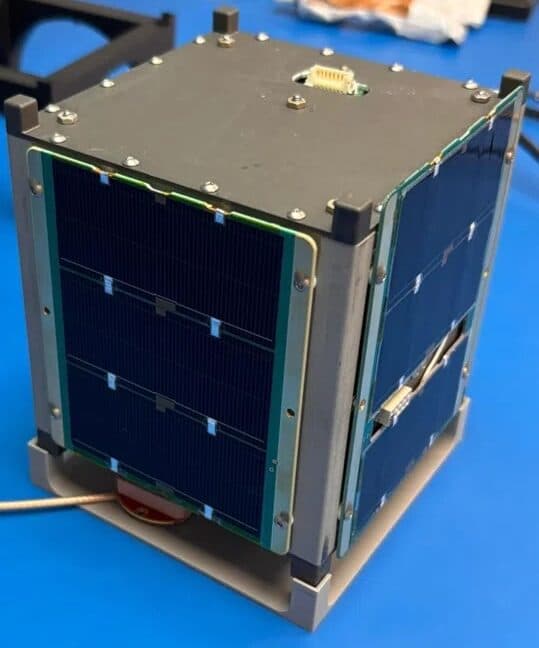
Reliable, long-duration power is a foundational requirement for any sustained human presence beyond Earth. Solar panels, while ubiquitous, face limitations in deep space, shadowed lunar craters, or during prolonged Martian nights. A recent development by Miami-based City Labs addresses this fundamental challenge, marking a significant milestone in the commercialization of space power.
City Labs has successfully demonstrated a commercial radioisotope power system (RPS) in space. Unlike traditional fission reactors, these systems convert heat from the natural decay of radioactive isotopes into electricity, providing a steady power output, often in the tens of watts, for decades. This technology has historically been the exclusive domain of government space agencies, powering iconic missions like NASA’s Voyager probes and the Perseverance rover on Mars.
The significance of City Labs' achievement lies in its commercial nature. By developing and deploying such a system outside of a government-funded program, the company signals a new era where private ventures can access and utilize these robust power sources. This opens pathways for extended mission durations, operations in previously inaccessible regions, and reduced reliance on orbital mechanics for optimal solar exposure.
This breakthrough simplifies the energy equation for future lunar bases and Martian habitats. Imagine a small, self-sufficient outpost, its essential systems — life support, communications, and internal lighting — quietly sustained by a power source that asks nothing of the distant sun. It is a quiet hum of energy, constant and unwavering.
Regulatory hurdles and the safe handling of radioactive materials have long been barriers to commercial involvement. City Labs’ success suggests a maturation of both the technology and the frameworks necessary to integrate such systems into the broader space economy. The implications extend from deep-space science to orbital debris tracking and lunar resource extraction.
This achievement marks 'a first for commercial nuclear power in space.'
For those who will one day live and work off-world, this means greater autonomy and resilience. Habitats will no longer be tethered to the diurnal cycles of a planetary body or the precise orientation required for solar arrays. Instead, a consistent energy supply enables continuous operations, advanced manufacturing, and a more predictable quality of life, fostering true permanence in the cosmos.
Related Reading

Space Tech
ispace Secures Starship Capacity for Lunar Heavy Cargo
Japanese lunar exploration firm ispace has partnered with SpaceX to utilize Starship for delivering substantially larger payloads to the Moon, signaling a pivotal shift towards robust lunar infrastructure.

Space Tech
A Shifting Tide in Orbital Ambition
Reports indicate a significant downturn in SpaceX's valuation, signaling potential shifts in the commercial space landscape and the pace of off-world development.

Space Tech
Venus Aerospace Secures $90M for Hypersonic Propulsion
A new funding round propels Venus Aerospace towards developing a novel rocket engine designed for ultra-fast travel, redefining the boundaries of terrestrial and orbital transit.