Artemis Program|Issue 04
Beyond Survival: Designing for Life on the Moon
As humanity prepares for sustained lunar habitation, the focus shifts from mere engineering to creating environments where people can truly thrive, reflecting a deeper understanding of off-world culture.
- By
- ARTEMIS TOKYO Editors
- Dateline
- Tokyo
- Date
- October 23, 2026
- Time
- 4 min read
Source
Dezeen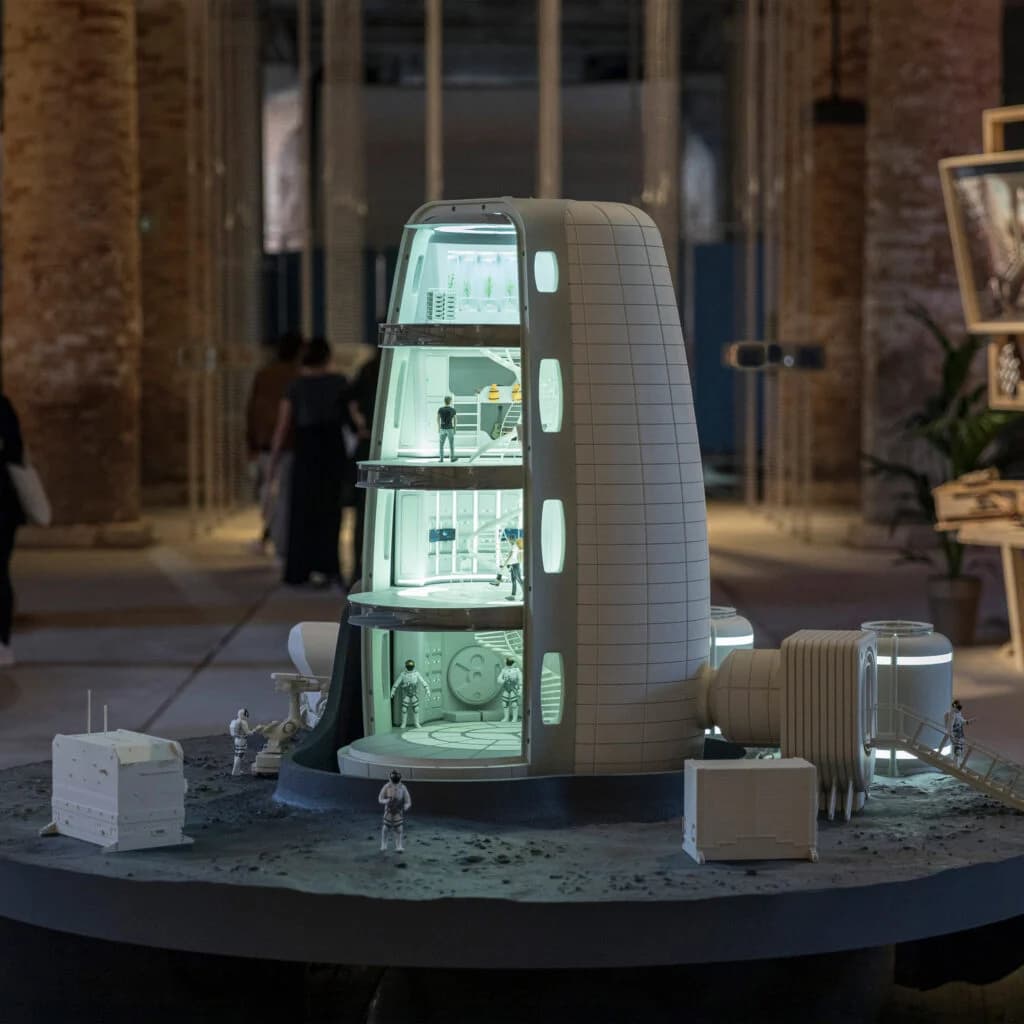
The prospect of human life on the Moon has long been framed by engineering challenges: propulsion, life support, radiation shielding. Yet, as the timeline for lunar settlement draws nearer, a more profound question emerges for architects and designers: what will it feel like to live there?
Jonathan Morrison, writing for Dezeen, highlights this crucial pivot. Early concepts for lunar habitats have often prioritized function over form, presenting utilitarian structures akin to research stations. The next phase of design demands a shift towards human-centric spaces that foster well-being and a sense of home.
This means moving beyond basic shelters to consider elements like natural light — or its artificial approximation — and the psychological impact of interior textures. Imagine a lunar habitat where the touch of a wall or the view from a window offers solace, rather than a stark reminder of isolation.
The material palette for these future homes will be defined by both scarcity and innovation. Locally sourced regolith, processed into construction aggregates, might be combined with advanced composites brought from Earth, creating a unique aesthetic that speaks to both practicality and aspiration.
"Getting people into space is one thing. Creating somewhere they actually want to live is quite another."
Consider the subtle gestures that define a living space: a comfortable chair, a plant (hydroponically grown, perhaps), the arrangement of a meal. These are the details that will transform a lunar outpost into a community, a mere dwelling into a cherished home.
For those who will call the Moon home, these architectural decisions will shape daily rhythms, social interactions, and even their emotional landscape. The design of a lunar habitat is not merely about surviving; it is about cultivating a new form of human culture, etched into the very structures they inhabit.
Related Reading

Artemis Program
Artemis Program Accelerates Lunar Lander Development for 2028 Missions
NASA and its partners are intensifying efforts to prepare human landing systems, signalling a strategic shift towards sustained lunar presence.

Artemis Program
Artemis III and IV: NASA Confirms Lunar Return Timeline
NASA outlines the next steps for its crewed lunar missions, aiming for human landings and orbital infrastructure by 2028, signaling a tangible horizon for off-world living.

Artemis Program
Moon Rovers: The Foundation of a Lunar Home
NASA's latest update on lunar rovers signals a shift from transient visits to the tangible establishment of an enduring human presence on the Moon. These vehicles are more than transport; they are the bedrock of future off-world living.